DocuMind
Turn Company Documents into an Intelligent Assistant
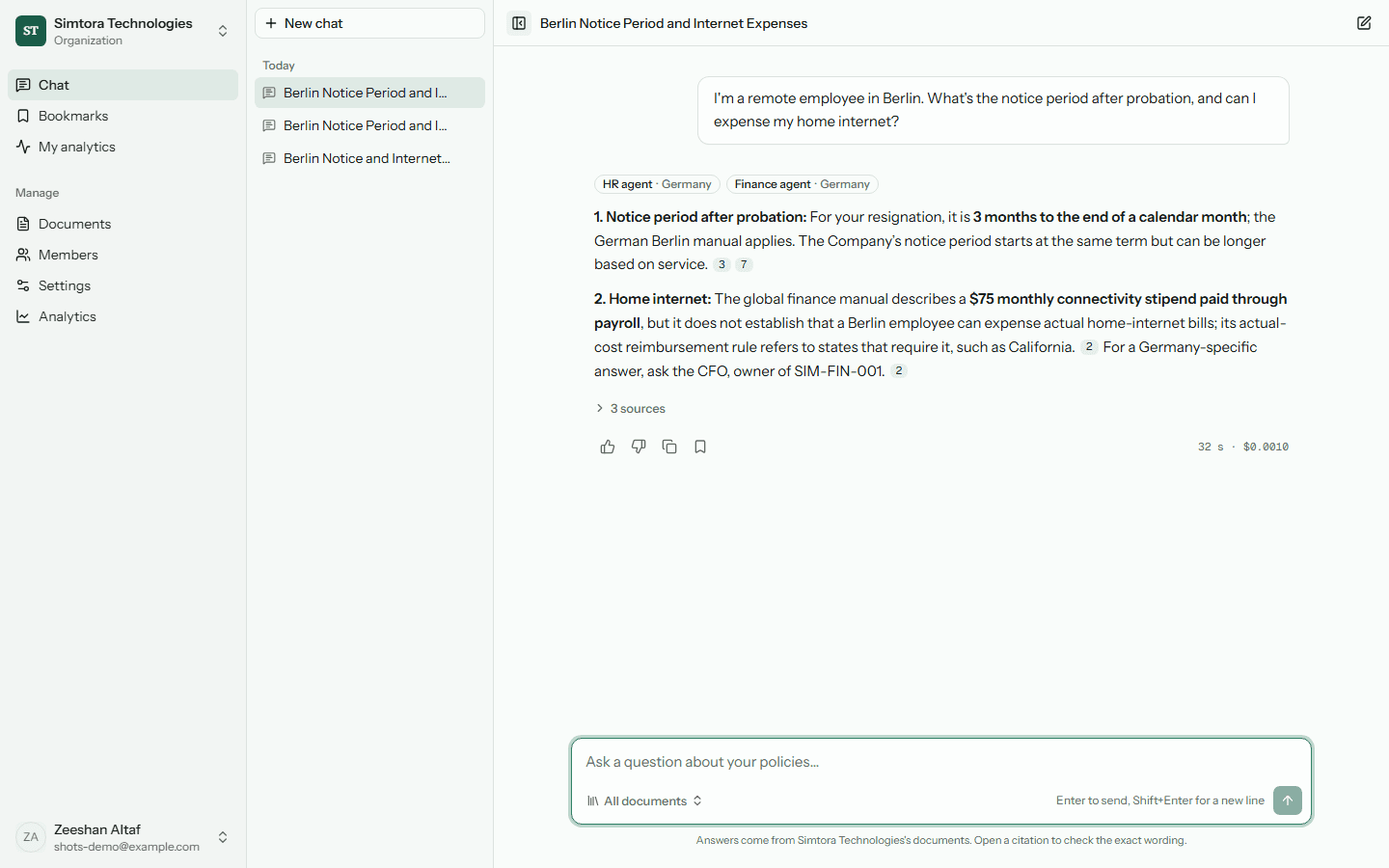
DocuMind turns a folder of company policy PDFs into an assistant employees can actually trust. Platform admins create organizations, upload documents and add members; members ask in plain language and get streamed answers with numbered citations that open the PDF at the cited page. Retrieval is hybrid — Okapi BM25 implemented in SQL fused with pgvector HNSW through weighted Reciprocal Rank Fusion — and an orchestrator routes each question to department specialists (HR, IT, Finance, Compliance…) that know when a country supplement overrides the base policy. Two companion apps ship with it: DocuMind Office, a walkable 3D virtual office where each department room has its own expert, and DocuMind Evaluation, a harness that measures the whole system end to end.
- Category
- Multi-tenant RAG Platform
- Role
- Solo design & engineering
- AI engine
- OpenAI + Claude judge
- Status
- Live · Open source
Next.jsReactTypeScriptTailwind CSSShadcn/UIFastAPIPythonOpenAI Responses APIPostgreSQLpgvectorBetter AuthMinIOThree.jsClaude (LLM judge)ResendUpstash Redis
Policy answers people can verify.
Hybrid retrieval
BM25 implemented in SQL catches document codes and defined terms; pgvector HNSW catches paraphrases. Weighted RRF fuses both, with a jurisdiction boost so the right country's manual wins.
Department agents
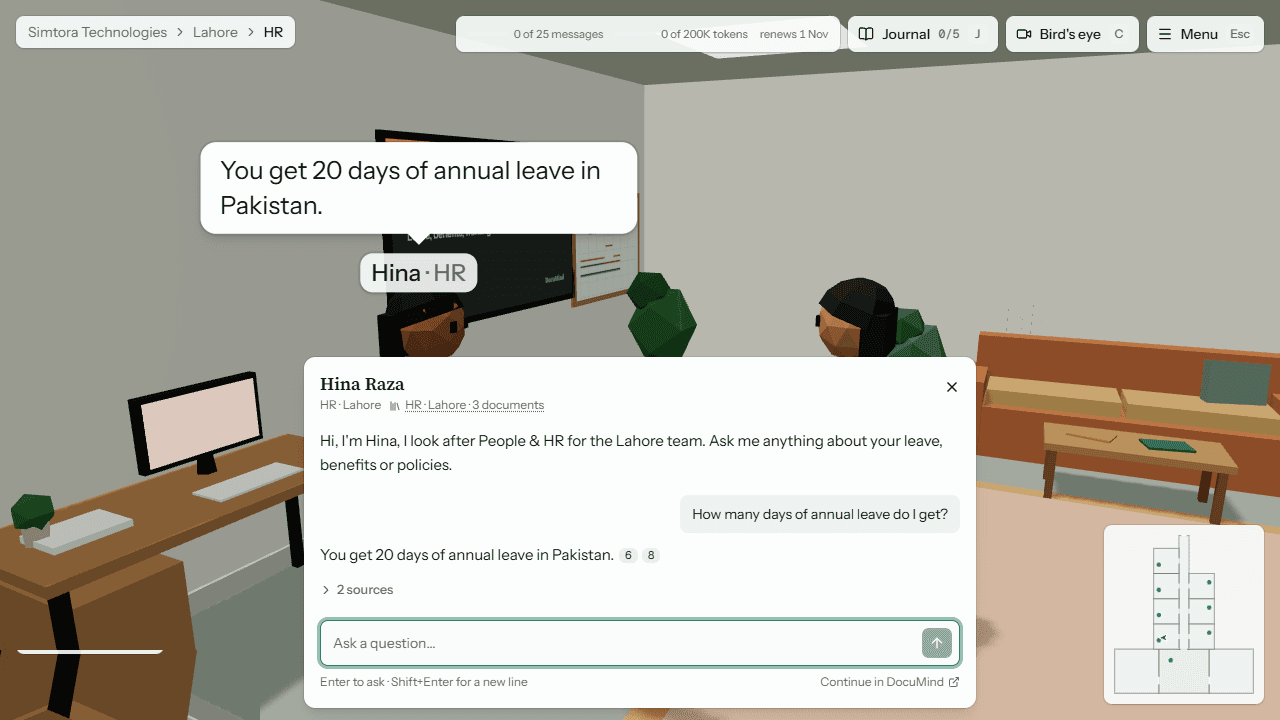
An orchestrator routes each question to HR, IT, Finance, Procurement, Facilities, Compliance or International specialists — skipped when the user scopes the chat to specific documents.
Page-exact citations
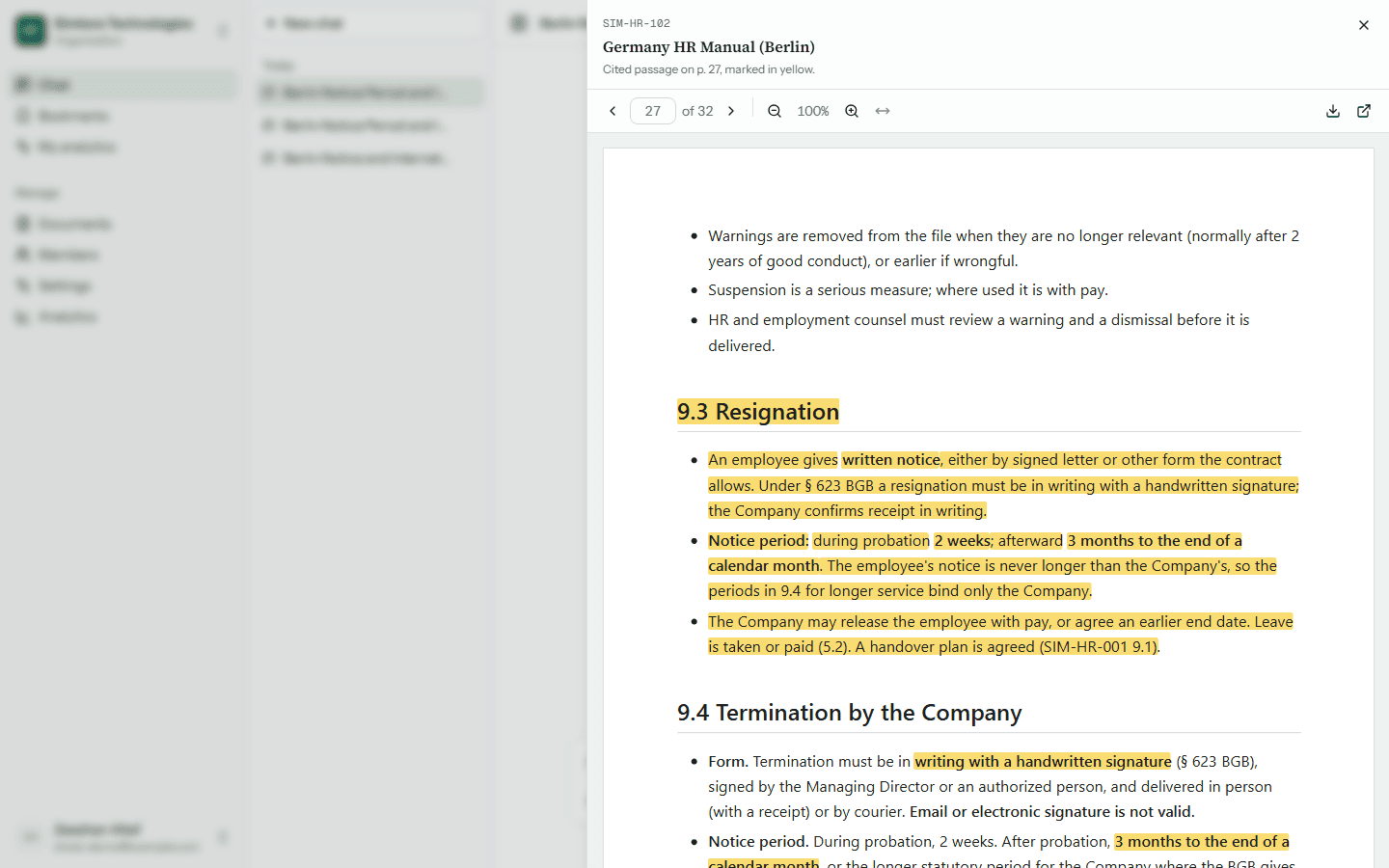
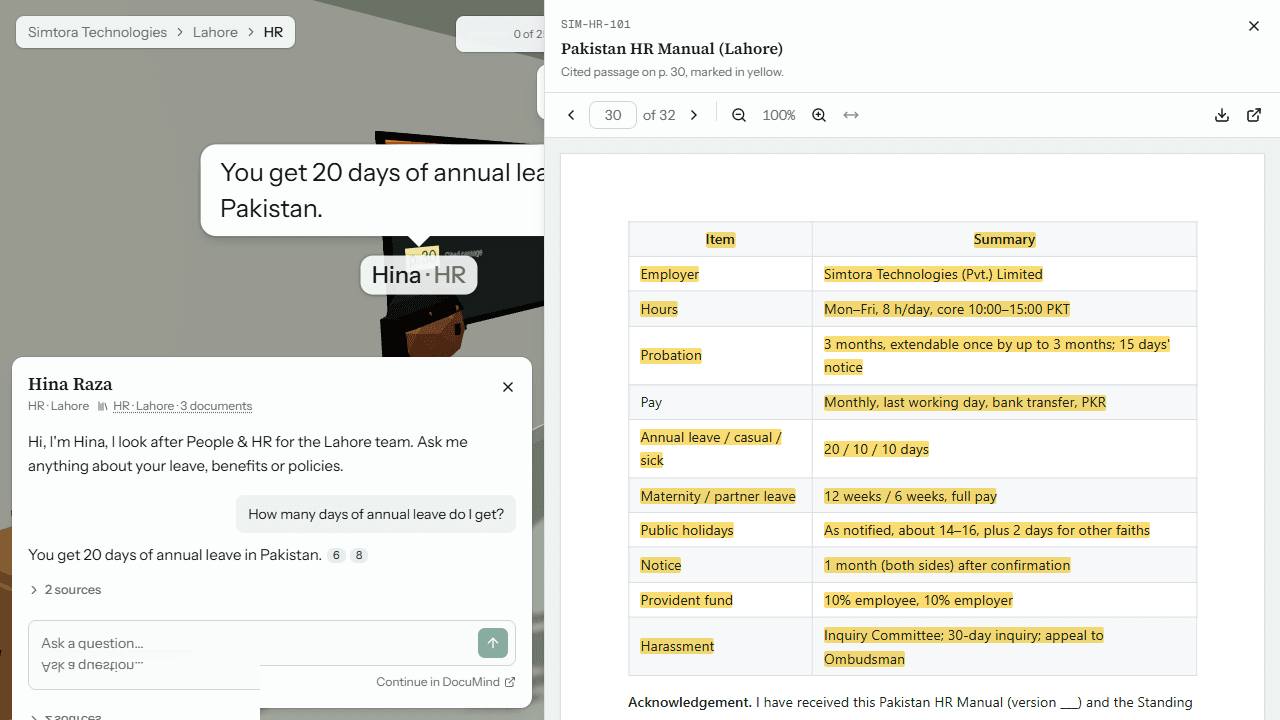
Every answer streams with numbered sources. Click one and the private PDF opens at that page with the passage highlighted.
Orgs, quotas & cost analytics
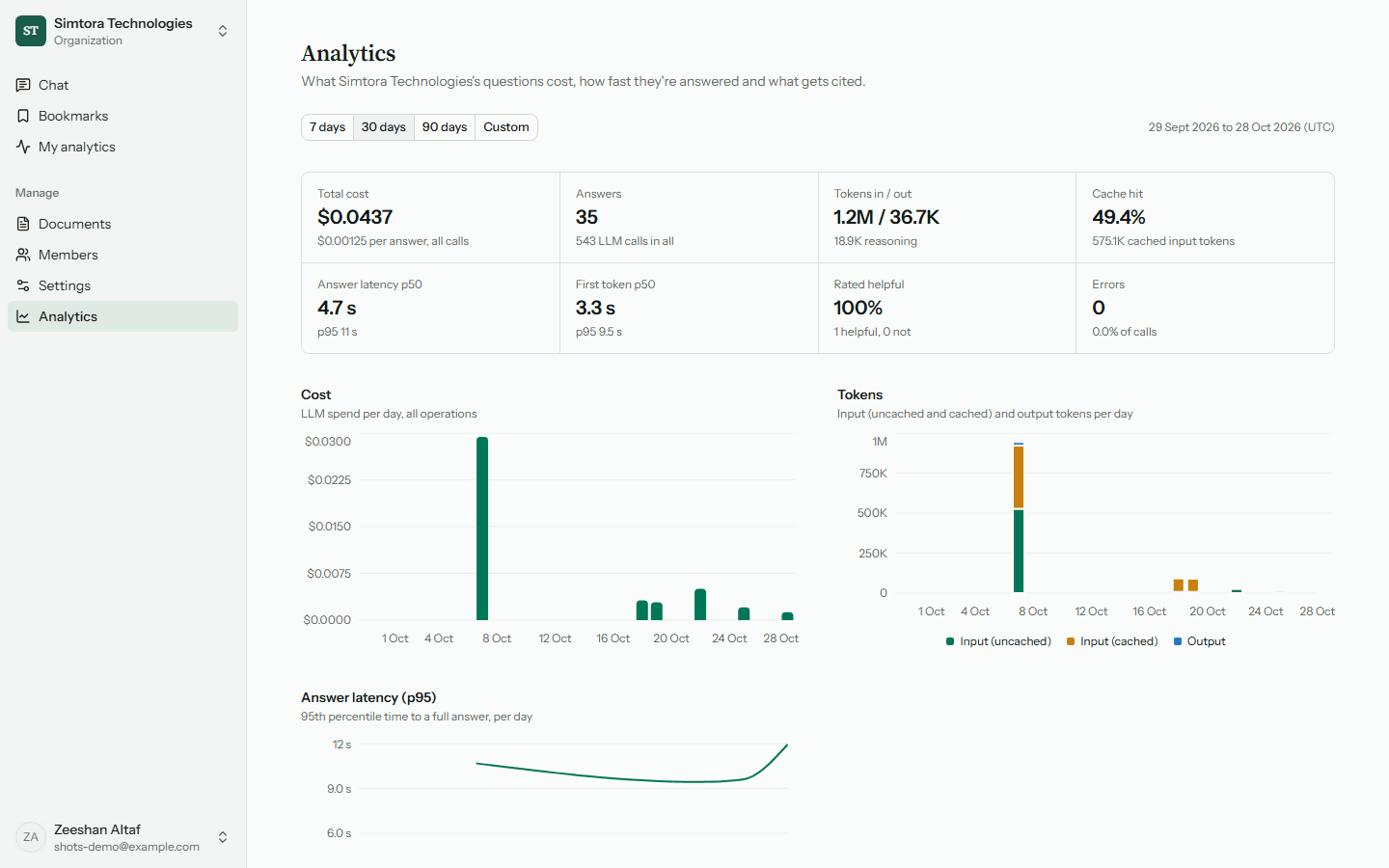
Per-organization documents, members and settings; monthly per-user quotas; every OpenAI call metered for tokens, tier, latency and cost, with standard/flex service tiers per org.
From a folder of PDFs to cited answers.
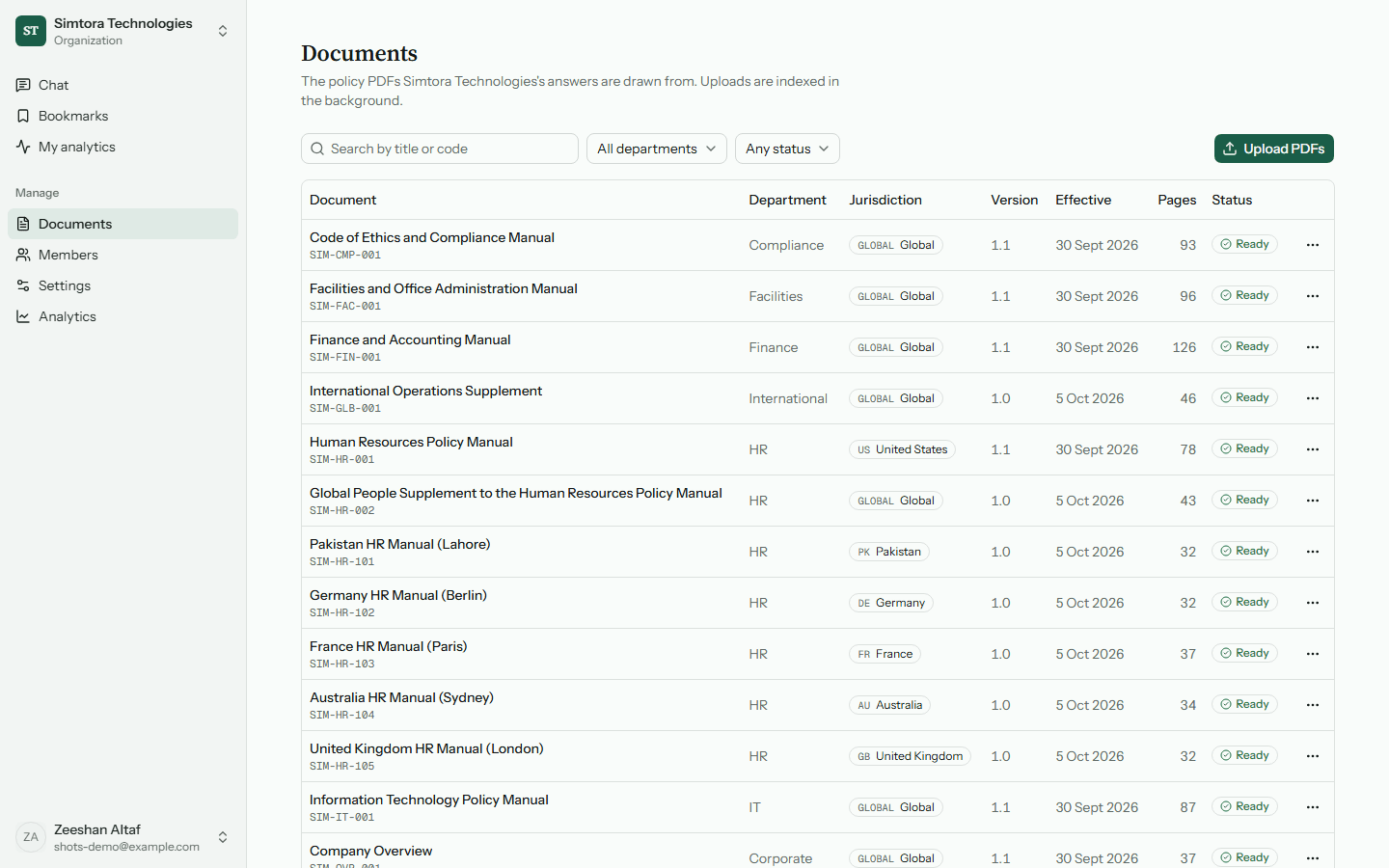
- 1Upload policy PDFs — each is validated, stored privately in MinIO and queued for indexing.
- 2A background worker parses pages, extracts metadata with an LLM, builds section-aware chunks with contextual headers, then embeds and indexes them.
- 3A member asks a question; the orchestrator routes it to the right department specialists and hybrid retrieval gathers the passages.
- 4One streamed call writes the answer with citations that open the exact PDF page.
Next.js front door, FastAPI brain.
BFF + FastAPI
The browser only talks to Next.js. A backend-for-frontend checks the Better Auth session, then calls FastAPI with a service key and the user id; SSE answers and PDFs stream through unbuffered.
Postgres 17 + pgvector
One database for auth, app data, vectors, BM25 terms and the durable ingestion job queue — plus a private MinIO bucket for the PDFs.
Self-hosted deploys
Coolify on a VPS, with a GitHub Actions workflow that lints, typechecks and redeploys only the app that changed.
A 3D office and an evaluation harness.
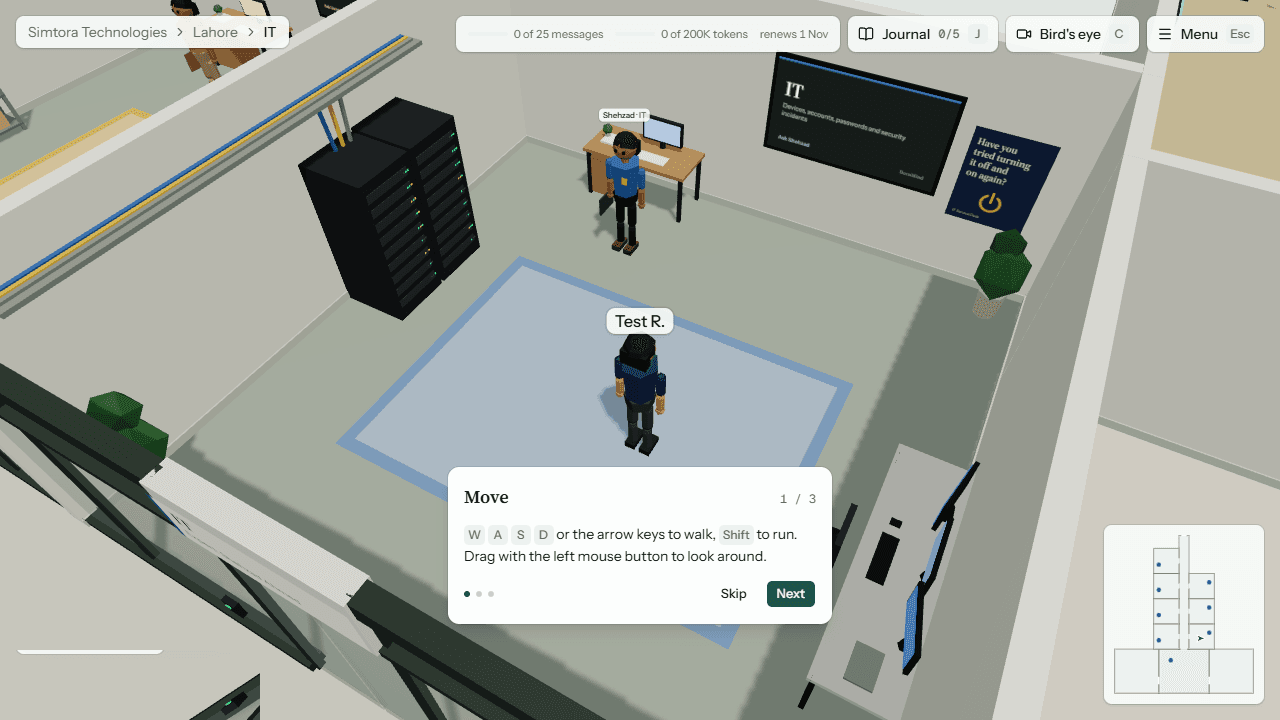
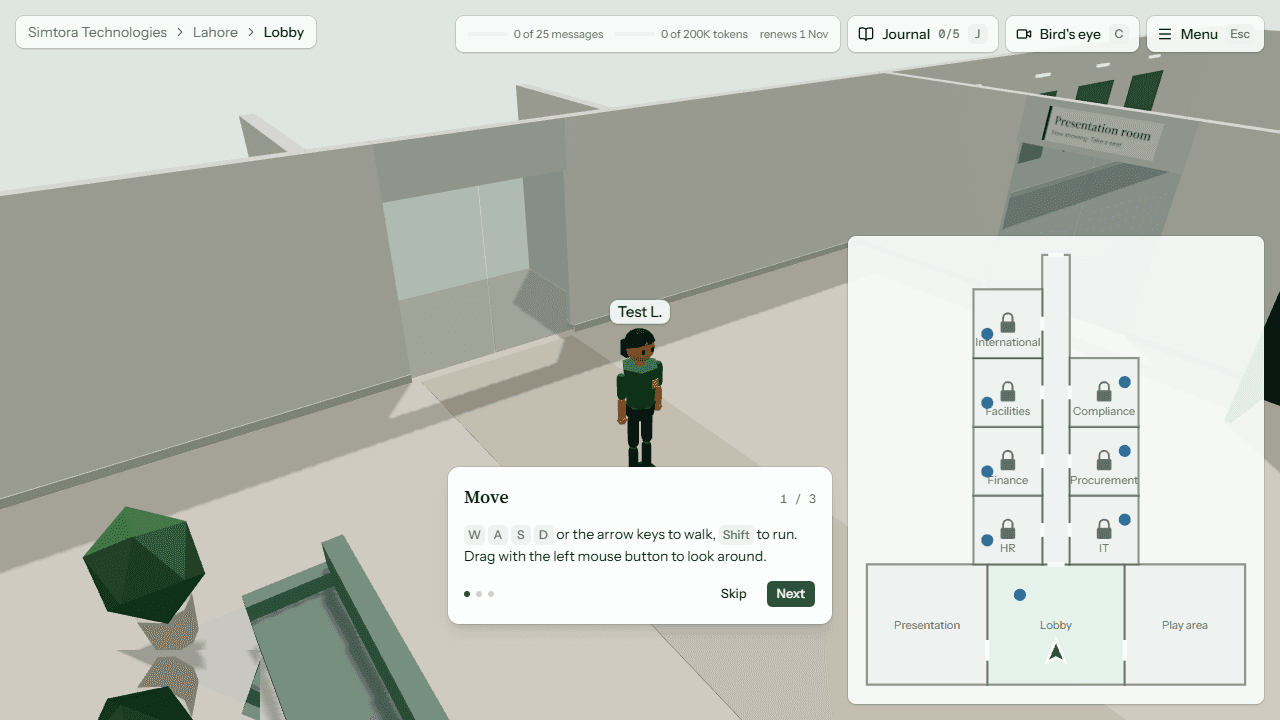
DocuMind Office
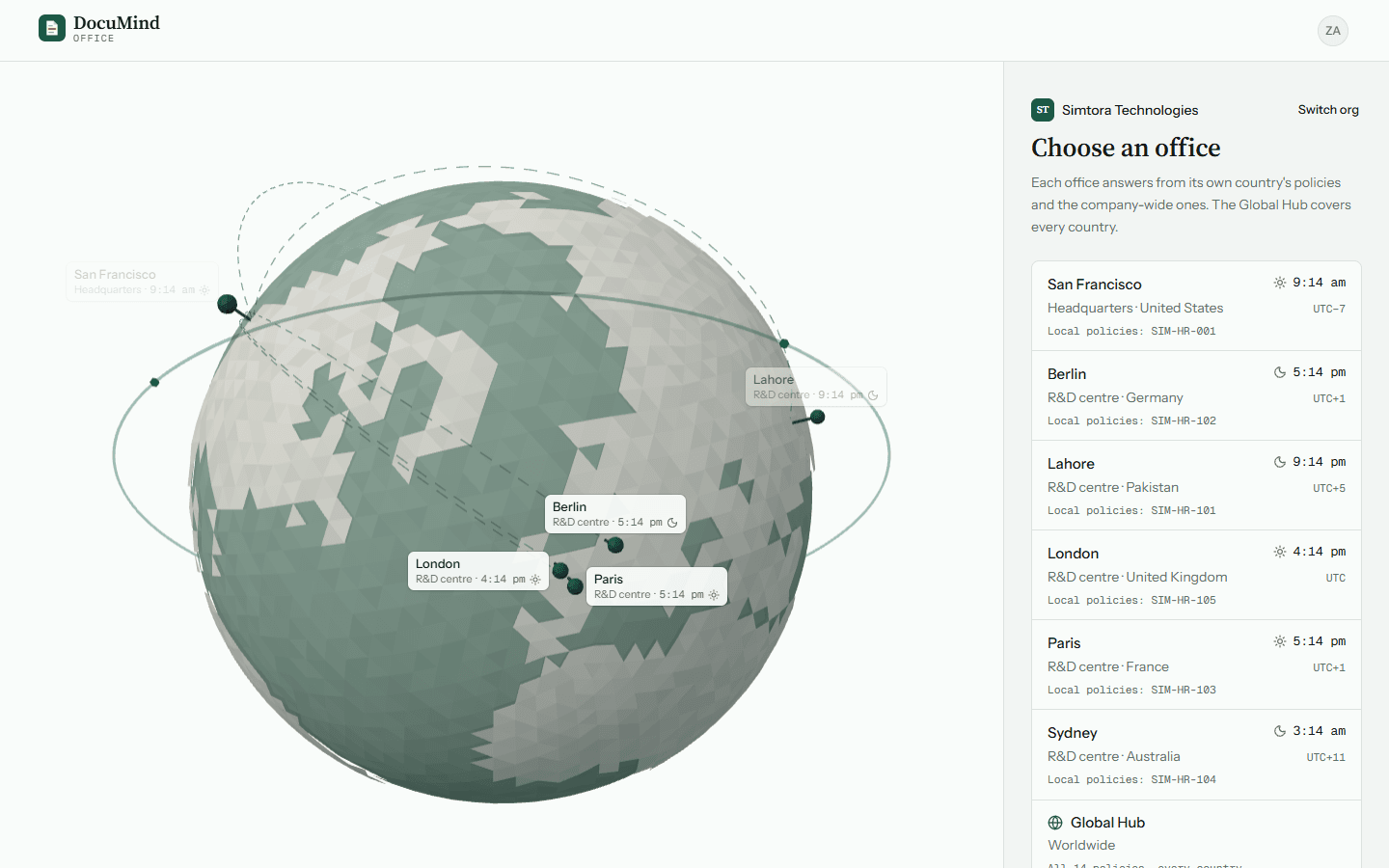
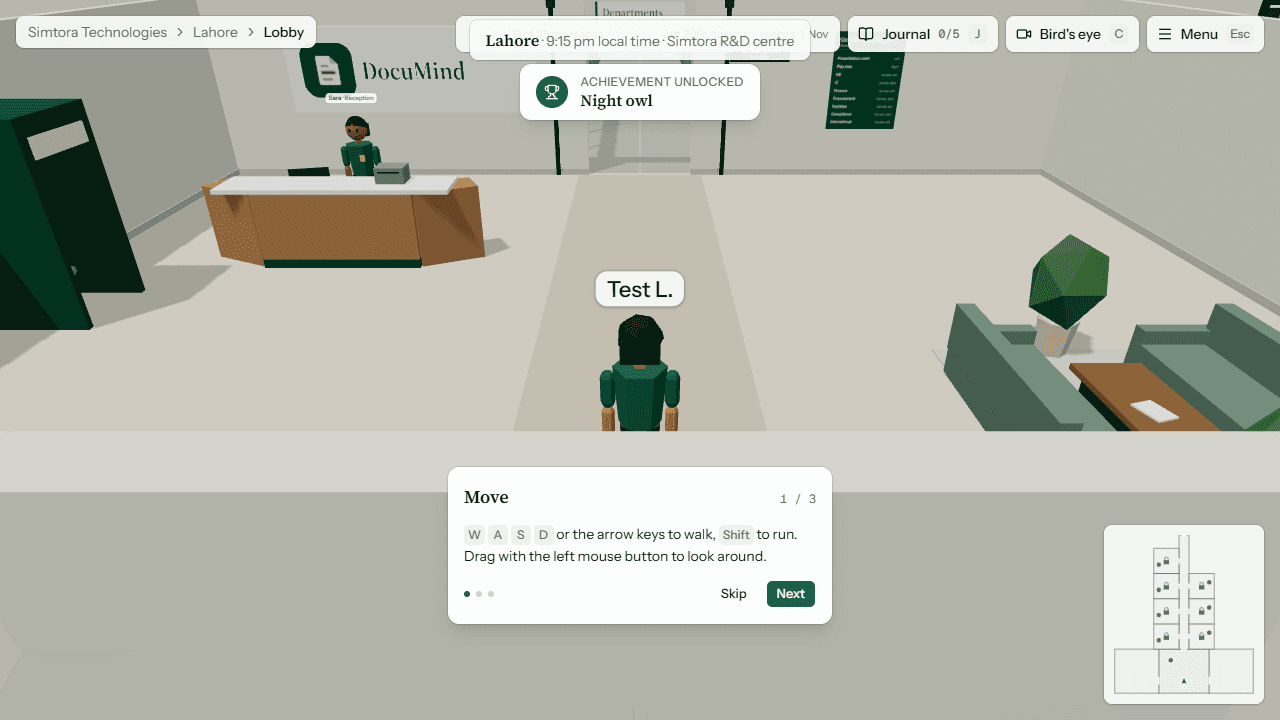
office.documind.zeeshanai.cloud — a walkable low-poly 3D office. Reception issues access cards, department rooms host experts that answer through DocuMind with real citations and real quota, plus a presentation room, play area, quests, achievements and a rooftop to unlock.
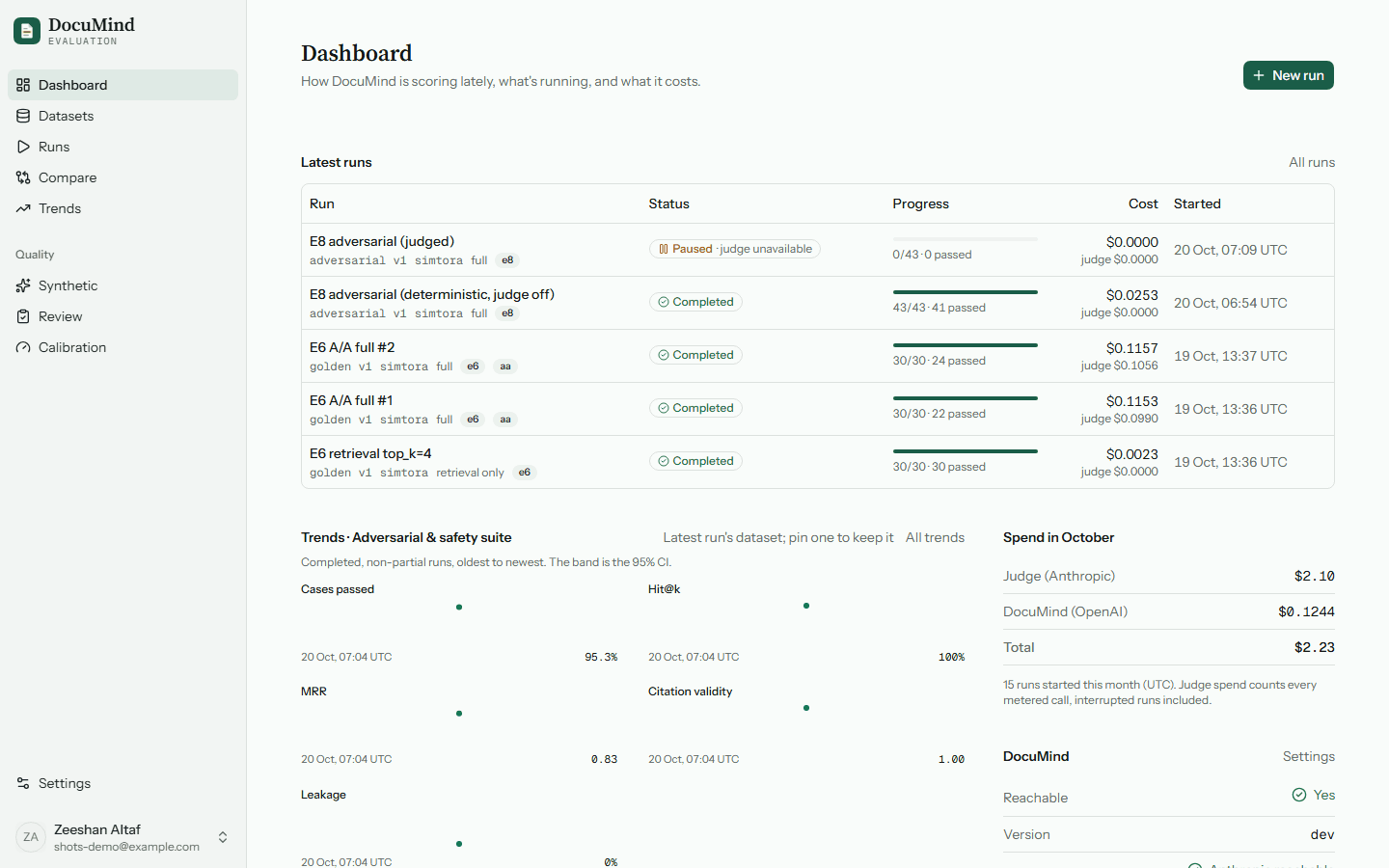
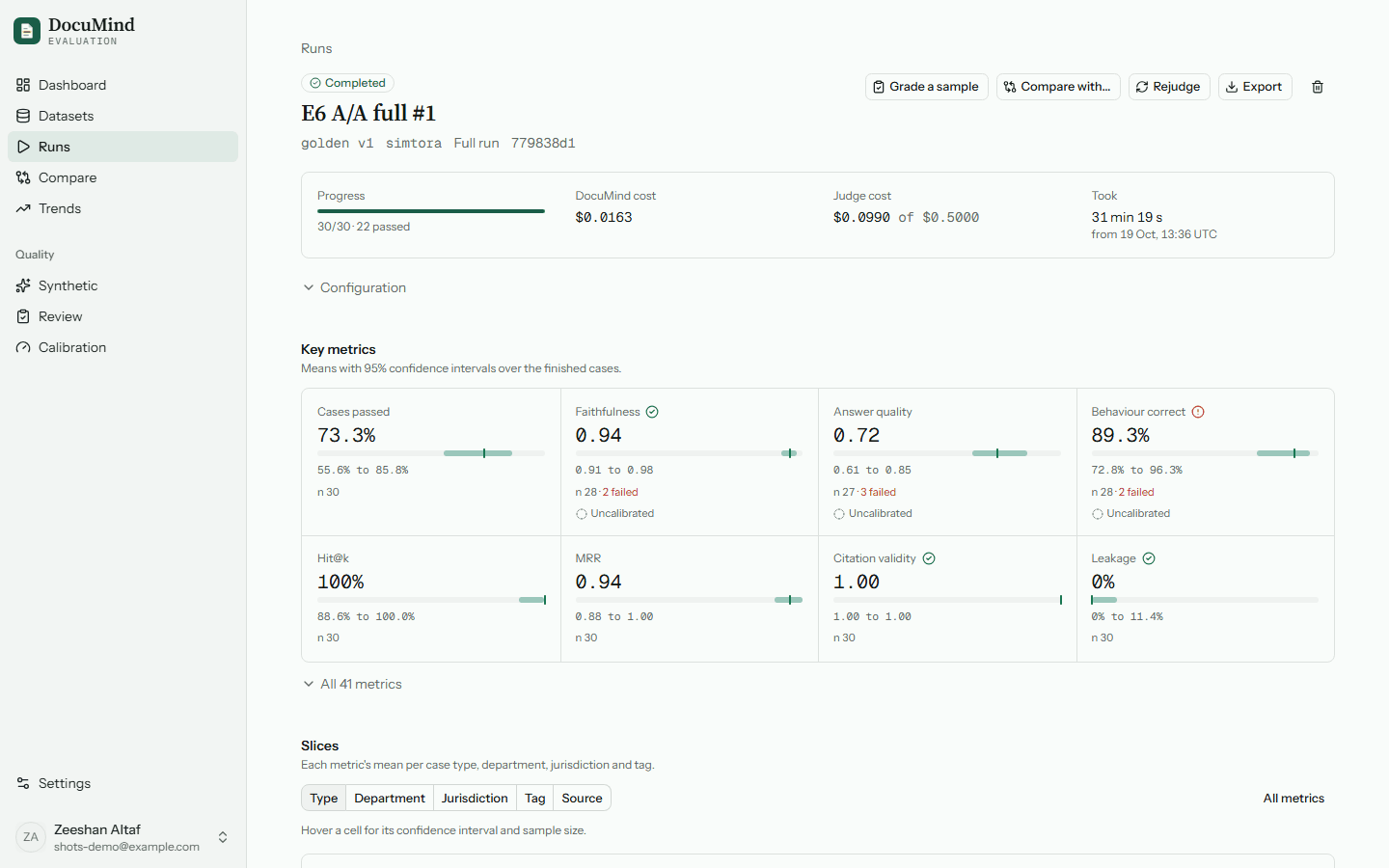
DocuMind Evaluation
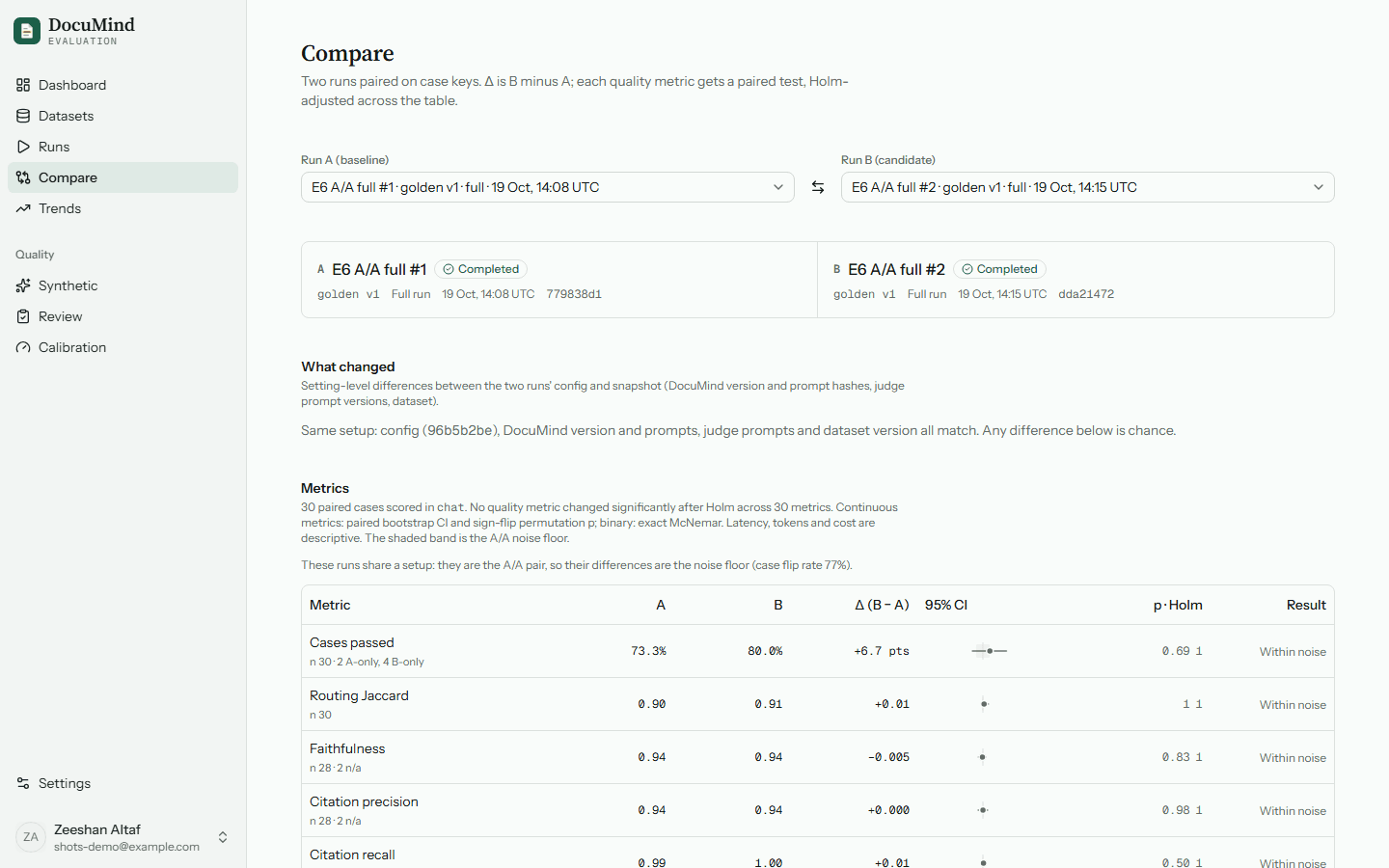
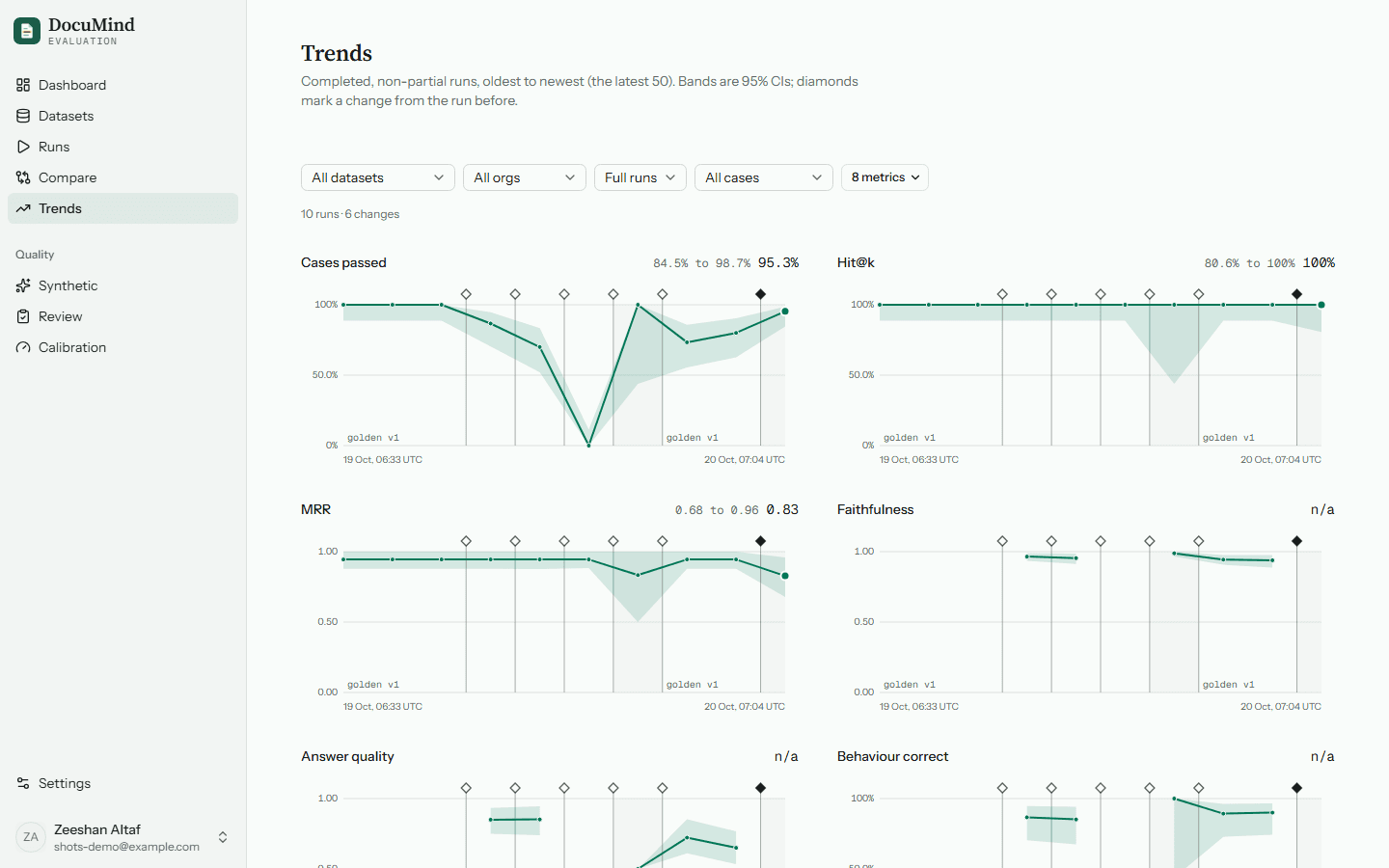
evaluation.documind.zeeshanai.cloud — a standalone admin app with versioned datasets and durable runs scored on retrieval, answers (Claude judge), citations, safety, cost and latency — with paired A/B comparison, bootstrap CIs and human-review judge calibration.
Adversarial & safety suite
Prompt injection, out-of-scope refusals, a leakage-canary organization, jurisdiction traps and authorization probes run against the live system.
A closer look.